
You walk into the gym and glance at the whiteboard. Heavy power cleans. Pull-ups. Double-unders.
A small voice in your head whispers:
"Can I do this RX?"
It feels like a pass-or-fail moment. But here is the twist most athletes discover after a few humbling workout sessions.
Scaling is not a step backward. It is how progress speeds up.
Fitness grows from quality reps.
Your body adapts to what you practice.
Practice quality reps and your body becomes stronger and more efficient.
Practice sloppy movement under a barbell that feels like a stubborn mule and your progress slows to a crawl.
Scaling keeps training in the sweet spot where effort is high and movement still looks sharp. Trying a variety of scaling options can keep things fresh while helping you ultimately master the skill.
That is where improvement lives.
Scaling solves two common problems
Many athletes stall out for the same reasons.
Weights that are too heavy
The workout turns into a slow grind.
Mechanics fall apart and the risk of injury increases.
The intended intensity dwindles.
2. Skills that are not ready yet
Pull-ups slow to tedious single attempts.
Double-unders turn into a painful reminder that the rope seems to have a personal grudge against your shins.
Scaling replaces those moments with productive training.
Pull-ups become ring rows or bent over rows
Double-unders become single-unders
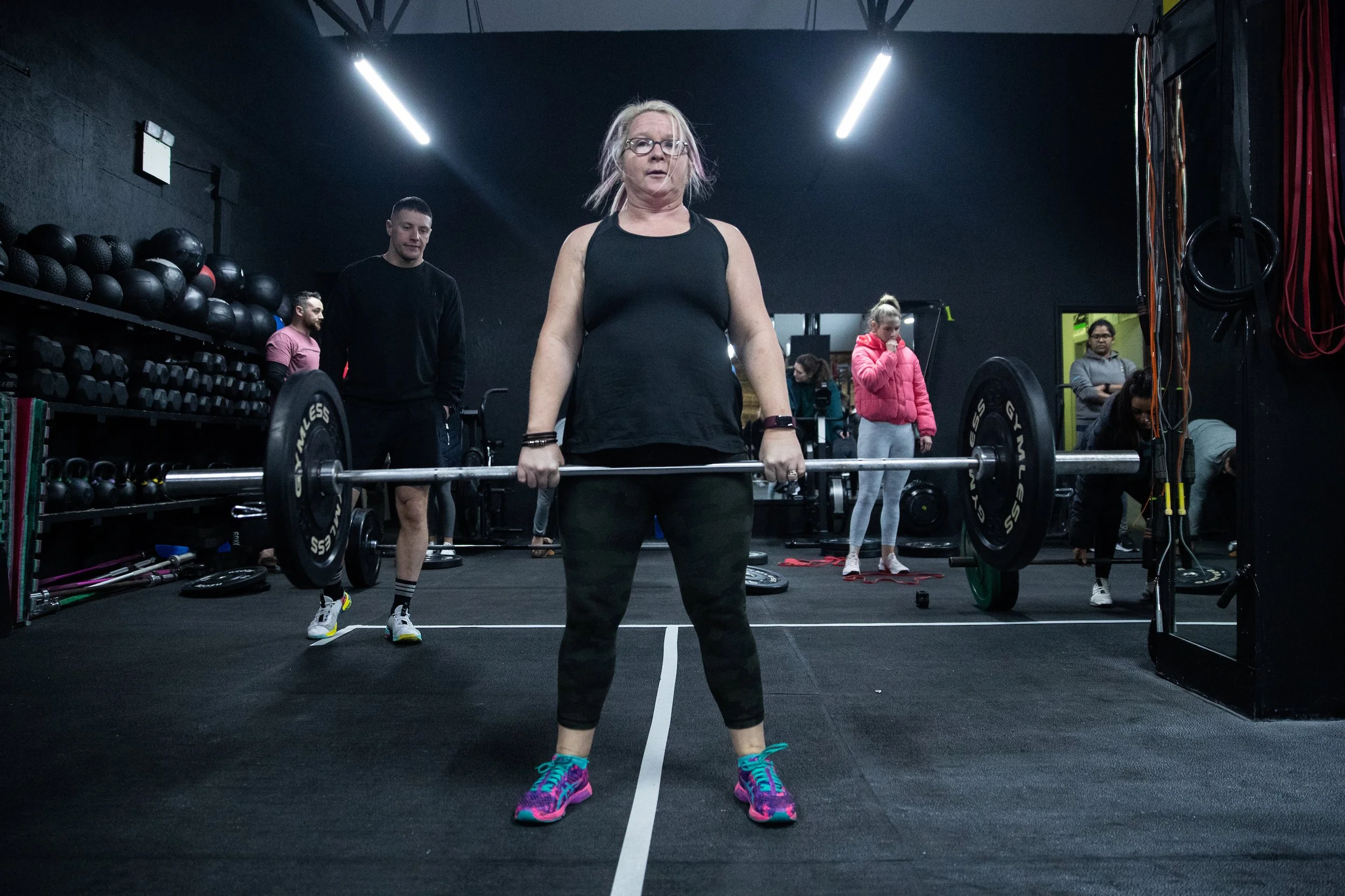
Heavy barbells are exchanged for loads you can move with control and efficiency
The muscles still work. The lungs still burn. The workout still does its job.
Only now your training moves forward safely and efficiently instead of spinning its wheels.
Progress loves consistency
Fitness is not built in heroic one-day efforts.
It grows from hundreds of workouts stacked together like bricks in a wall.
Scaling helps you keep placing those bricks.
Better movement.
Better intensity.
Better results over time.
The next time you scan the whiteboard, try a different question.
Instead of asking:
“Can I RX this?”
Ask:
"What version of this workout will help me train best today?"
That is the question athletes ask when they want to improve for the long run.
~Coach Christie